🦷 Why Hepatitis Stays Silent — Viral Persistence, Immune Evasion, and Progressive Liver Damage

How Infection, Immunity, and Time Shape One of the Most Misunderstood Diseases

🧠 Start Here: The Real Question
When patients hear “hepatitis,” they often ask:
“Do I feel sick?”“Will I notice it?”“Is it serious right now?”
The important question is NOT:
👉 “Do symptoms exist?”
The real question is:
👉 “Is liver damage occurring—even if the body feels normal?”
Because hepatitis is one of the clearest examples in medicine where:
disease progression ≠ symptom awareness
🧩 What Is Hepatitis (Mechanistically)?
Hepatitis = inflammation of the liver
But the mechanism is critical:
👉 Most liver damage in viral hepatitis is not caused directly by the virus
👉 It is caused by the immune system responding to infected liver cells
🧠 Core Insight
The virus infects the liver—but the immune system determines how much damage occurs

🧬 The Hepatitis Viruses — Same Target, Different Strategies
Each hepatitis virus behaves differently at the molecular and clinical level.
📊 Hepatitis Overview (A–E)
Virus | Transmission | Acute vs Chronic | Key Feature |
Hep A (HAV) | Fecal–oral | Acute only | Self-limited, no chronic disease |
Hep B (HBV) | Blood, sexual, vertical | Acute + chronic | DNA virus, immune-mediated damage |
Hep C (HCV) | Blood | Mostly chronic | RNA virus, high persistence |
Hep D (HDV) | Requires HBV | Severe | Co-infection worsens disease |
Hep E (HEV) | Fecal–oral | Acute (severe in pregnancy) | Waterborne outbreaks |
🧠 ToothOps Insight
The same symptom (hepatitis) can arise from completely different biological strategies
🔬 Why Hepatitis Often Feels “Silent”
⚙️ 1. The Liver Has Functional Reserve
large organ
high regenerative capacity
👉 significant damage can occur before function declines
⚙️ 2. No Pain Fibers in Liver Tissue
liver parenchyma lacks pain receptors
👉 damage occurs without pain
⚙️ 3. Gradual Immune-Mediated Injury
immune cells attack infected hepatocytes slowly
👉 leads to progressive fibrosis, not sudden failure
🧠 Core Insight
Hepatitis is often silent because damage is gradual, internal, and initially compensated

🔬 Viral Persistence — Why Some Infections Never Fully Clear
🧬 Hepatitis B (HBV)
DNA virus
enters nucleus of hepatocytes
forms cccDNA (stable viral template)
👉 allows long-term persistence
🧬 Hepatitis C (HCV)
RNA virus
high mutation rate
👉 constantly changes → immune evasion
🧠 Critical Insight
Chronic hepatitis is not failure of immunity—it is a dynamic balance between virus adaptation and immune pressure
⚙️ Immune Evasion — How the Virus Stays Hidden
Mechanisms:
↓ antigen presentation
viral mutation (HCV)
immune tolerance (HBV, especially if infected early in life)
🧠 Result:
immune system cannot fully clear infection
ongoing low-grade inflammation
👉 leads to chronic liver damage
🔁 What Actually Damages the Liver
Not primarily:
❌ viral destruction
Instead:
✅ immune-mediated cytotoxicity
CD8+ T cells attack infected hepatocytes
cytokines amplify inflammation
🧠 ToothOps Insight
The liver is damaged by the body’s attempt to protect itself
⚠️ From Silent Disease → Structural Damage
Progressive Pathway
Inflammation
Fibrosis (scar formation)
Cirrhosis
Liver failure or cancer
🧠 Key Insight
The danger is not the infection alone—it is the accumulation of damage over time
🧪 How We Detect Hepatitis (What Labs Actually Mean)
Liver Enzymes
Test | Meaning |
ALT | hepatocyte injury |
AST | liver + muscle injury |
👉 Elevated enzymes = cell damage, not necessarily function loss
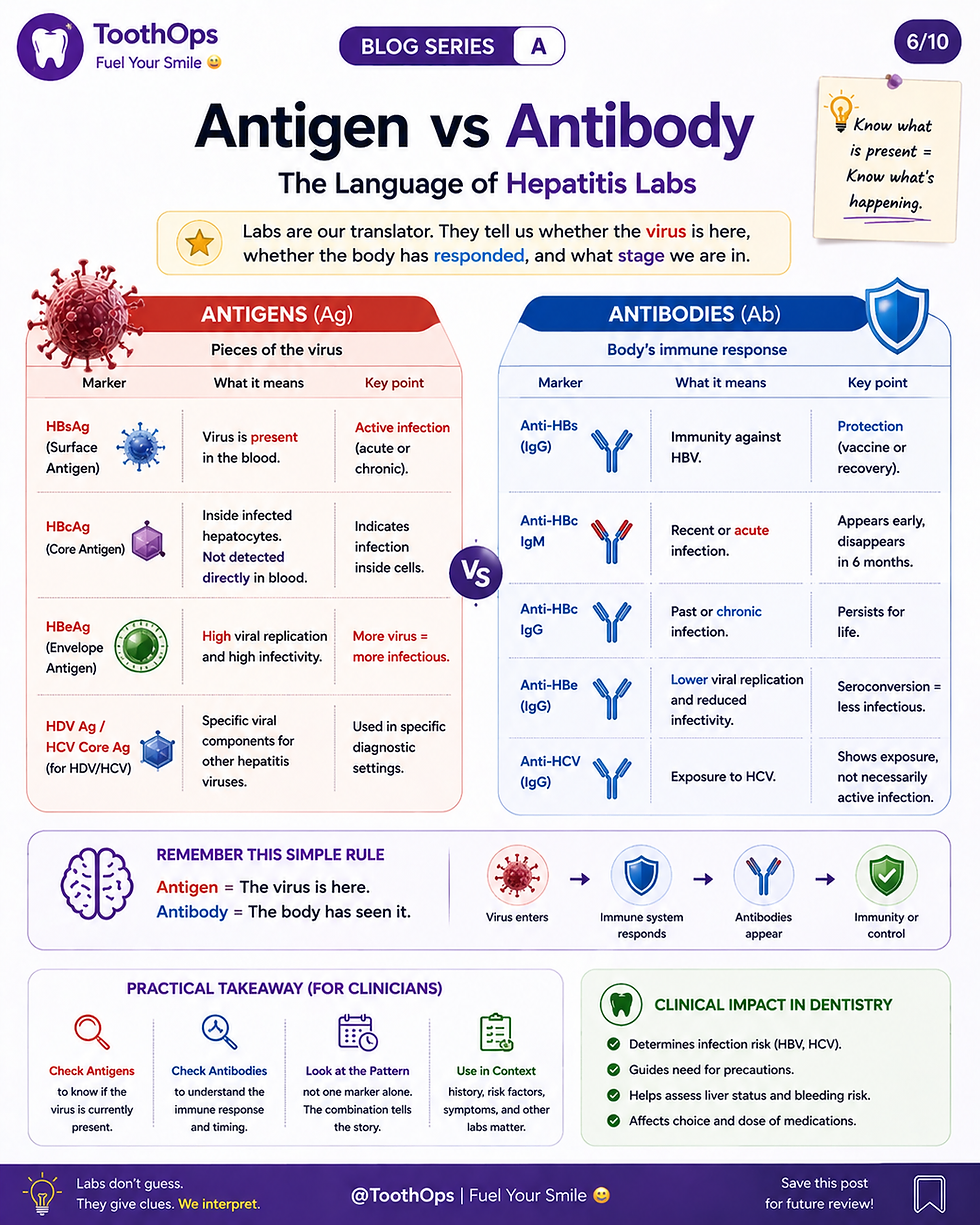
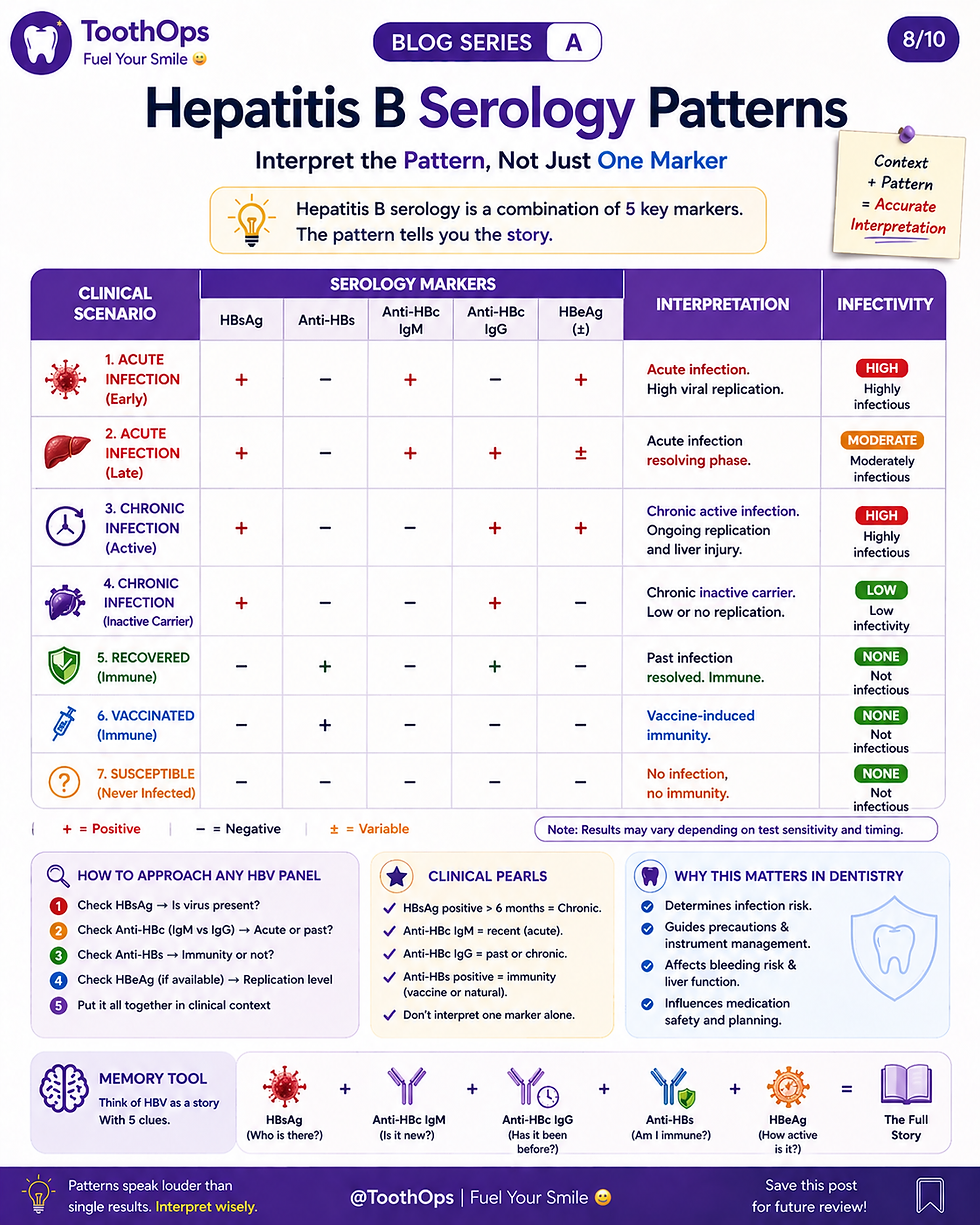
HBV Serology (Simplified)
Marker | Meaning |
HBsAg | active infection |
Anti-HBs | immunity |
Anti-HBc | prior exposure |
HCV Testing
anti-HCV → exposure
HCV RNA → active infection
🧠 Critical Insight
Labs tell you what phase the disease is in, not just whether it exists
🟡 Why Hepatitis C Becomes Chronic More Often
Mechanism:
rapid mutation
weak immune clearance
Result:
👉 ~70–85% develop chronic infection
🧠 Insight
HCV wins by constantly changing—staying one step ahead of immunity
🔴 Why Hepatitis B Can Be More Dangerous Long-Term
Mechanism:
viral DNA integrates into host cells
long-term persistence
Risks:
cirrhosis
hepatocellular carcinoma
🧠 Insight
HBV doesn’t just persist—it can reprogram cellular behavior
🦷 Dentistry & Clinical Relevance
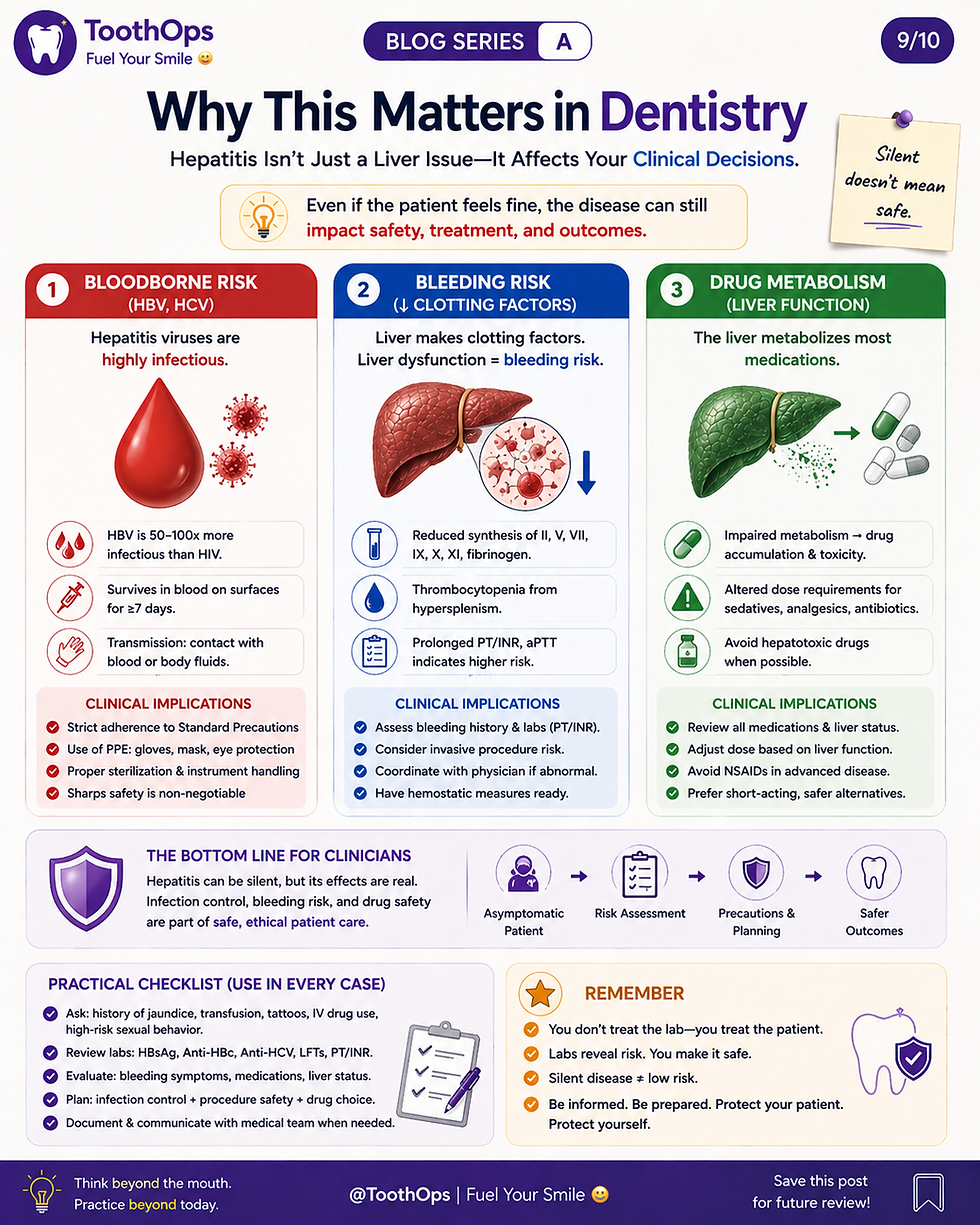
⚠️ Bloodborne Pathogens
Relevant viruses:
HBV
HCV
🧠 Risk Principle
Transmission requires exposure + viable virus + pathway
Clinical Considerations
standard precautions (always)
do NOT rely on patient disclosure alone
consider liver function in:
bleeding risk
drug metabolism
💊 Medication Implications
Liver disease affects:
drug metabolism
clotting factor production
👉 impacts:
anesthetics
analgesics
bleeding risk
💬 Chairside Translation
“The liver can be affected for a long time without causing symptoms. That’s why we rely on tests and history—not just how someone feels.”
🧠 ToothOps Clinical Thinking
When evaluating a patient:
1. Is there liver involvement?
👉 history, labs
2. Is infection active or past?
👉 serology
3. Is function impaired?
👉 bleeding, drug metabolism
4. What is the risk during treatment?
👉 procedure + systemic status
✨ Final Takeaway
Hepatitis is not just an infection.
👉 It is a long-term interaction between a virus and the immune system
And:
👉 The most important damage happens before symptoms appear

🧠 ToothOps Insight
Silence in disease does not mean safety—it often means progression without awareness
@ToothOps | Fuel Your Smile 😊
Stay tuned for more insights and educational content in our blog.
Disclaimer: Content is for educational purposes only and not a substitute for medical or dental care.
© 2025 ToothOps | All Rights Reserved.


Comments