🩸 When Blood Sugar Speaks: How Diabetes Quietly Shows Up Before the Diagnosis
- ToothOps

- Mar 18
- 4 min read
Most patients with diabetes don’t walk into a clinic saying, “I think my blood sugar is high.”What they say instead is far more subtle — and far more common:
“I’m tired all the time.”“I’m constantly thirsty.”“I just don’t feel like myself anymore.”
Diabetes mellitus is often present years before it is formally diagnosed, and its earliest manifestations are systemic — frequently involving the oral cavity. For dental professionals, recognizing these early patterns is not about making a diagnosis, but about understanding how disrupted glucose regulation produces predictable clinical clues. This post explains what patients experience, why these symptoms occur, and why dentistry plays a critical role in early recognition.

🧬 What Diabetes Mellitus Really Is (Without the Noise)
Diabetes mellitus is a group of metabolic disorders characterized by chronic hyperglycemia resulting from inadequate insulin secretion, impaired insulin action, or both.
But the central problem is not sugar alone.
Insulin is the hormone responsible for allowing glucose to move from the bloodstream into cells, where it can be used to generate energy. When insulin is absent or ineffective, glucose accumulates in the blood while cells remain functionally starved.
This creates a physiologic paradox:
Excess glucose in circulation
Insufficient usable energy within tissues
This mismatch underlies nearly every sign and symptom of diabetes.
🧠 Memory Anchor: High sugar outside the cell ≠ energy inside the cell.

🚨 Why the Classic Symptoms Occur
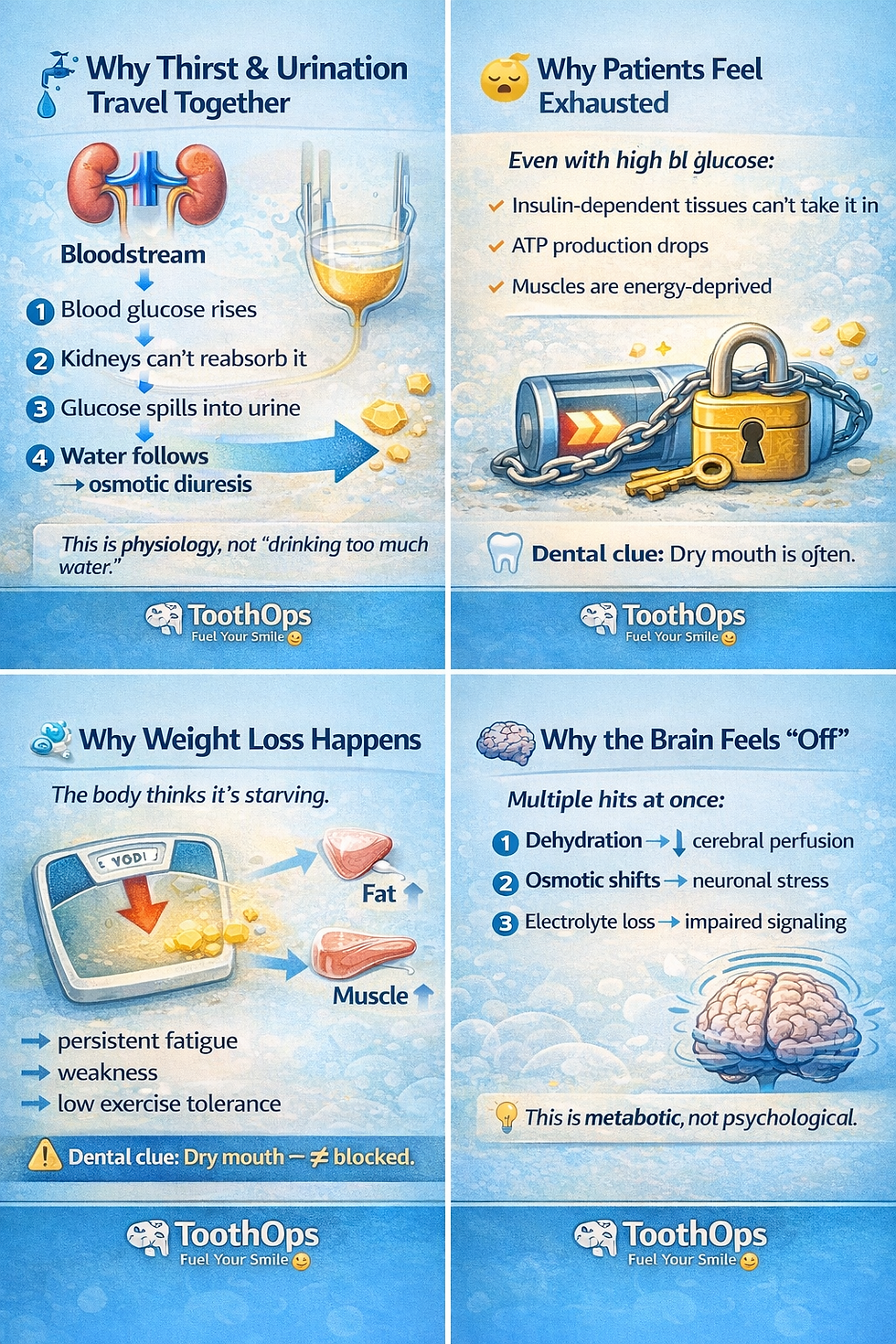
💧 Polyuria & Polydipsia: A Kidney-Driven Chain Reaction
One of the earliest organ systems affected in diabetes is the kidney.
Under normal conditions, glucose filtered by the kidneys is almost completely reabsorbed in the proximal tubules. When blood glucose levels exceed the renal reabsorption threshold, this capacity is overwhelmed. Glucose remains in the tubular fluid and is excreted in the urine (glucosuria).
Because glucose is osmotically active, it pulls water with it, producing osmotic diuresis. This results in:
Excessive urine production (polyuria)
Loss of free water and electrolytes
Progressive intravascular and intracellular dehydration
As circulating volume declines, hypothalamic osmoreceptors stimulate thirst, leading to polydipsia as a compensatory response. Increased fluid intake does not fully correct dehydration because glucose-driven water loss continues.
🦷 Dental Angle: This systemic dehydration contributes directly to:
Xerostomia
Thick or ropey saliva
Increased caries risk
Oral discomfort despite frequent hydration
Dry mouth in diabetes is not a local problem — it reflects whole-body fluid imbalance.
🫁 Fatigue & Weakness: Energy Locked Out of the Cell
Despite elevated blood glucose levels, insulin-dependent tissues such as skeletal muscle and adipose tissue cannot efficiently transport glucose into cells.
As a result:
Cellular glucose uptake declines
ATP production decreases
Tissues exist in a state of functional energy deprivation
To compensate, the body shifts toward catabolic metabolism. Clinically, this produces persistent fatigue, reduced exercise tolerance, and generalized weakness — symptoms often misattributed to stress, aging, or poor sleep.
🧠 Key Concept: Fatigue in diabetes is not caused by low sugar — it is caused by inaccessible sugar.
🫁 Weight Loss: Catabolism Despite Abundance
When cells cannot access glucose, the body interprets this as starvation. Counter-regulatory hormones such as glucagon promote:
Lipolysis (fat breakdown)
Proteolysis (muscle breakdown)
Increased hepatic gluconeogenesis
Calories are also lost directly through glucosuria. Together, these mechanisms lead to unintentional weight loss, even when appetite is normal or increased.
This process is especially pronounced in insulin-deficient states but may also occur in poorly controlled type 2 diabetes.
🧠 Confusion & Mental Fog: The Brain Feels the Imbalance
The brain relies on tightly regulated internal conditions. In diabetes, several mechanisms disrupt cerebral homeostasis:
Dehydration reduces cerebral perfusion
Rapid osmotic shifts alter neuronal function
Electrolyte disturbances impair synaptic signaling
Clinically, patients may experience difficulty concentrating, mental fog, confusion, tremulousness, or exaggerated reflexes. These neurologic findings are metabolic in origin, not psychiatric or primary neurologic disease.
💡 Clinical Pearl: When mental status improves with correction of fluids and glucose, the cause was systemic.
🫁 Fruity Breath & Deep Breathing: A Pattern That Matters
When insulin deficiency becomes significant — particularly during infection or physiologic stress — the body shifts aggressively toward fat metabolism.
Fat breakdown generates free fatty acids, which are converted in the liver into ketone bodies.
Accumulation of these acids produces:
Fruity or acetone-like breath odor
Long, deep breathing as respiratory compensation for acidosis
Nausea, vomiting, and epigastric abdominal pain
Worsening mental status
💡 Pro Tip: Deep, labored breathing in this context is not anxiety — it is physiology.
🫁 When Illness Makes Everything Worse
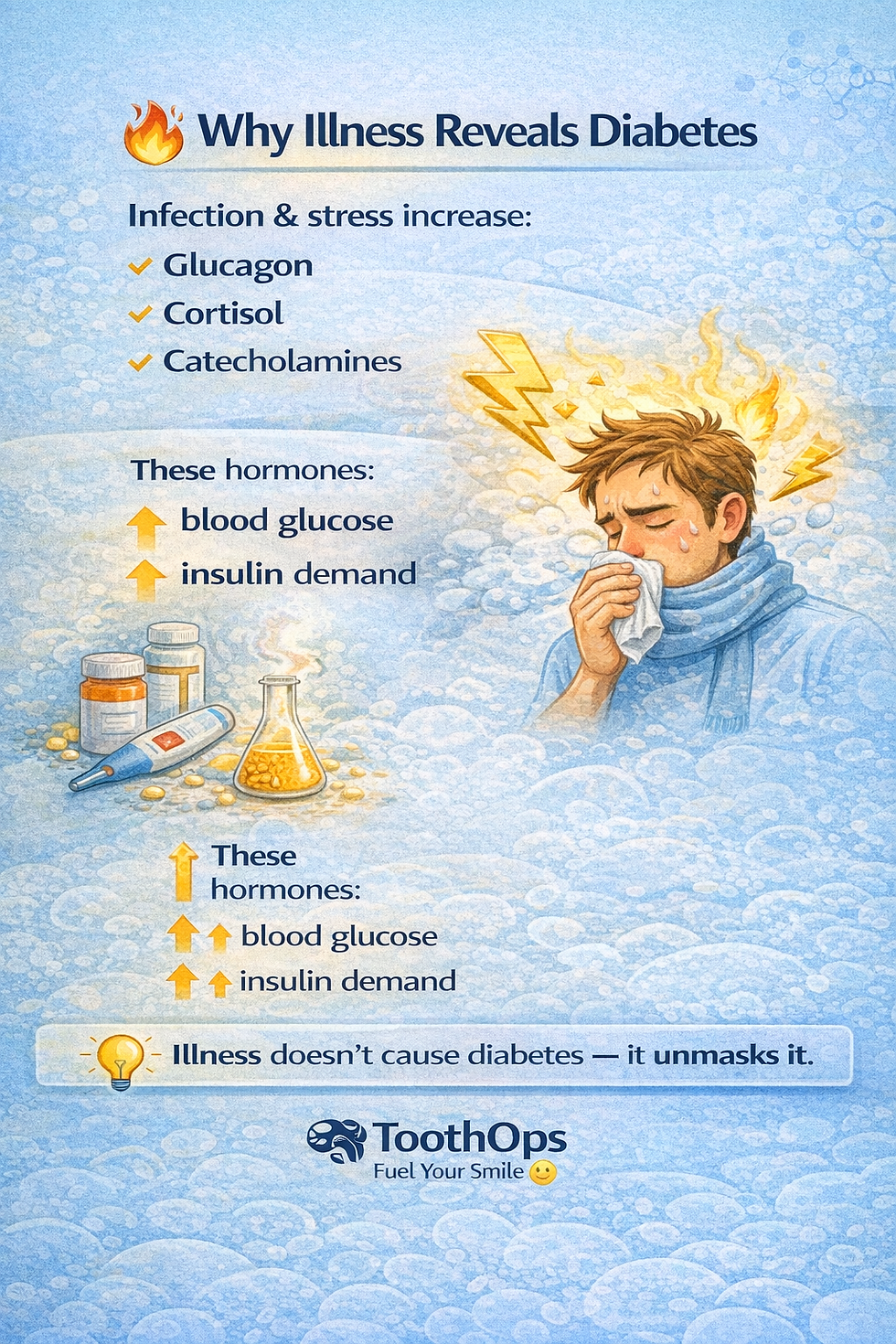
Acute stressors such as infection or inflammation increase counter-regulatory hormones including glucagon and cortisol. These hormones raise blood glucose, increase insulin demand, and accelerate dehydration and catabolism.
In individuals with limited insulin reserve or insulin resistance, acute illness does not cause diabetes — it reveals underlying metabolic instability.
🦷
The Dental Relevance (Why This Matters in Clinic)
The American Dental Association recognizes diabetes as a major modifier of oral health.
Common oral findings in poorly controlled diabetes include:
Xerostomia
Delayed wound healing
Increased susceptibility to infection
Oral candidiasis
Exaggerated gingival inflammation
Accelerated periodontal destruction
Diabetes and periodontal disease share a bidirectional relationship: chronic inflammation worsens glycemic control, while hyperglycemia amplifies periodontal breakdown.
💡 Clinical Insight: When periodontal disease appears disproportionate to plaque levels, think systemically.
Diabetes is not silent — it whispers long before it screams. Fatigue, thirst, dry mouth, weight loss, confusion, delayed healing, and inflammation are not random complaints; they are predictable physiologic consequences of disrupted insulin signaling.
For dental professionals, recognizing these patterns allows us to protect patients, coordinate care, and practice dentistry that respects the entire body, not just the tooth.
🎯 ToothOps Microhabit
Ask yourself why a symptom exists.Mechanisms turn memorization into understanding.
@ToothOps | Fuel Your Smile 😊
Stay tuned for more insights and educational content in our blog.
Disclaimer: Content is for educational purposes only and not a substitute for medical or dental care.
© 2025 ToothOps | All Rights Reserved


Comments